

Cottonopolis and the Battle for the Ballot.


Charles Dickens's Manchester
“It was a town of red brick, or of brick that would have been red if the smoke and ashes had allowed it; but, as matters stood it was a town of unnatural red and black like the painted face of a savage. It was a town of machinery and tall chimneys, out of which interminable serpents of smoke trailed themselves for ever and ever, and never got uncoiled. It had a black canal it, and a river that ran purple with ill-smelling dye, and vast piles of building full of windows where there was a rattling and a trembling all day long, and where the piston of the steam-engine worked monotonously up and down, like the head of an elephant in a state of melancholy madness. It contained several large streets all very like one another, and many small streets still more like one another, inhabited by people equally like one another.”
Dickens’s description of Coketown in Hard Times is supposedly inspired by Victorian Manchester.

The Science and Industry Museum
On a trip to Manchester, students from English Literature and History and American studies from York St John University got to experience this Dickensian picture of a Victorian city for themselves. The Science and Industry museum proved useful in our studies as we investigated Manchester’s past as ‘Cottonopolis’ (City of Cotton), and the global link cotton brought to Manchester.
The Textile Gallery in the Great Western Warehouse allowed us to see the machines that once made Manchester’s cotton world famous, with a pre-lunchtime demonstration given by the museum showing us how the cotton was processed to make cloth. Whilst we only watched one of every machine, in a real factory there would be more than one floor with different rooms for the steps needed for the process. The noise just from one of these machines was loud enough, but to have several was so loud that workers used to have their own sign language known as "Meemaw". What was more shocking was the fact that little children over the age of 5 were sent as scavengers underneath the working machinery to clean the floor and machine. The number of seconds they had to do this before obtaining a serious injury was beyond dangerous. These are just a few of the working conditions of a factory that leads us nicely to investigate the Chartism presentation in the People’s History Museum after lunch.
The People's History Museum
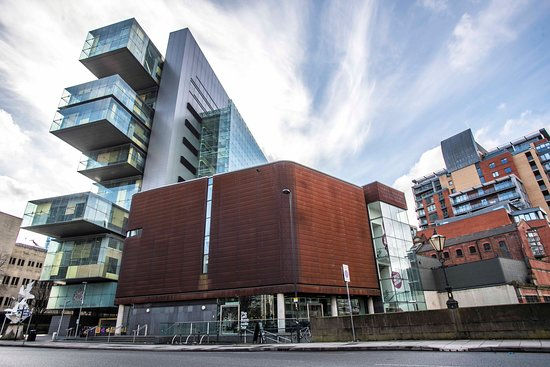
The People’s History Museum also proved very useful in gaining information for our module, ‘Early Victorian England’. The museum displayed numerous interactive screens and objects to explain how voting worked during the Victorian period and into the 21st century. As part of our module, Chartism is one of our topics. The Early Victorian period saw the government run by aristocratic men, limiting how much say the working- class men (and women!) had on the politics of the country, and indeed how they led their lives. The Chartism movement looked to reform the current political system to ensure that working- class lives would improve. One of the documents on display was a poster by a Chartist leader, Henry Vincent, who was also a Member of Parliament. This proved particularly interesting as not only was this primary source an insight into local Chartism history but also showed that the Chartists were not just the working class.


The information that I have gained from both museums has allowed me to get a clearer picture of what life was like for society in the working period but also gave me a reminder of how Britain was always playing that part in the wider empire through trading, and the use of slaves. It was an enjoyable trip, and I would thoroughly recommend it to future students!


Comments